Healthy Boundaries with Challenging Individuals
In the intricate dance of human relationships, establishing and maintaining healthy boundaries is crucial for our emotional well-being. While not all relationships are smooth sailing, dealing with challenging individuals requires a delicate balance of assertiveness, empathy, and self-awareness. Let's explore what developing healthy boundaries with challenging people can look like and how it contributes to fostering positive connections.
What Are Healthy Boundaries and Why Do They Matter?
Boundaries are the invisible lines that define the limits of what we are comfortable with, emotionally, physically, and mentally. Developing healthy boundaries involves recognizing and communicating our needs while respecting the needs of others. When dealing with challenging individuals, this becomes even more crucial to maintain a sense of self and preserve your mental and emotional space. When you have an experience or relationship with someone who is challenging or dysregulating to your central nervous system, implementing effective healthy boundaries can be a way to ground and protect yourself.
The Role of Self-Reflection in Setting Boundaries
The first step in establishing healthy boundaries is self-reflection. Understand your values, priorities, and what makes you feel comfortable or uncomfortable. This self-awareness forms the foundation for setting boundaries that align with your well-being. Take the time to reflect on your emotions, triggers, and areas where you may need more protection. Spend some time identifying why and how these challenging people in your life impact you in this manner. When you are analyzing these situations, relationships, and responses, make sure you are doing so from a non-blaming and compassionate perspective.
Effective Communication: The Key to Managing Difficult Relationships
Communication is key in any relationship, especially when dealing with challenging individuals. Be clear and assertive about your boundaries without being confrontational. Use "I" statements to express your feelings and needs, focusing on your experience rather than placing blame. For example, say, "I feel overwhelmed when there are constant interruptions during work, and I need focused time to be productive." Allow yourself to communicate assertively and advocate for yourself and your needs.
Consistency: The Backbone of Healthy Boundaries
Consistency is the glue that holds boundaries together. Once you've communicated your boundaries, it's essential to uphold them consistently. This sends a message that your boundaries are non-negotiable and helps set expectations for future interactions. Consistency also reinforces the idea that your well-being is a priority and deserves respect. If you establish a boundary and then don’t uphold it yourself, it creates confusion and ambiguity about not only your expectations but the nature of your relationship.
Prioritizing Self-Care to Navigate Challenging Dynamics
Dealing with challenging individuals can be emotionally draining. Prioritize self-care to recharge and maintain resilience. Whether it's taking breaks, practicing mindfulness, or engaging in activities that bring you joy, self-care is a powerful tool for preserving your mental and emotional health. Continuous exposure to challenging people can also take a toll on your self-worth and self-esteem, which is why having healthy boundaries is so crucial.
Mastering the Art of Saying No
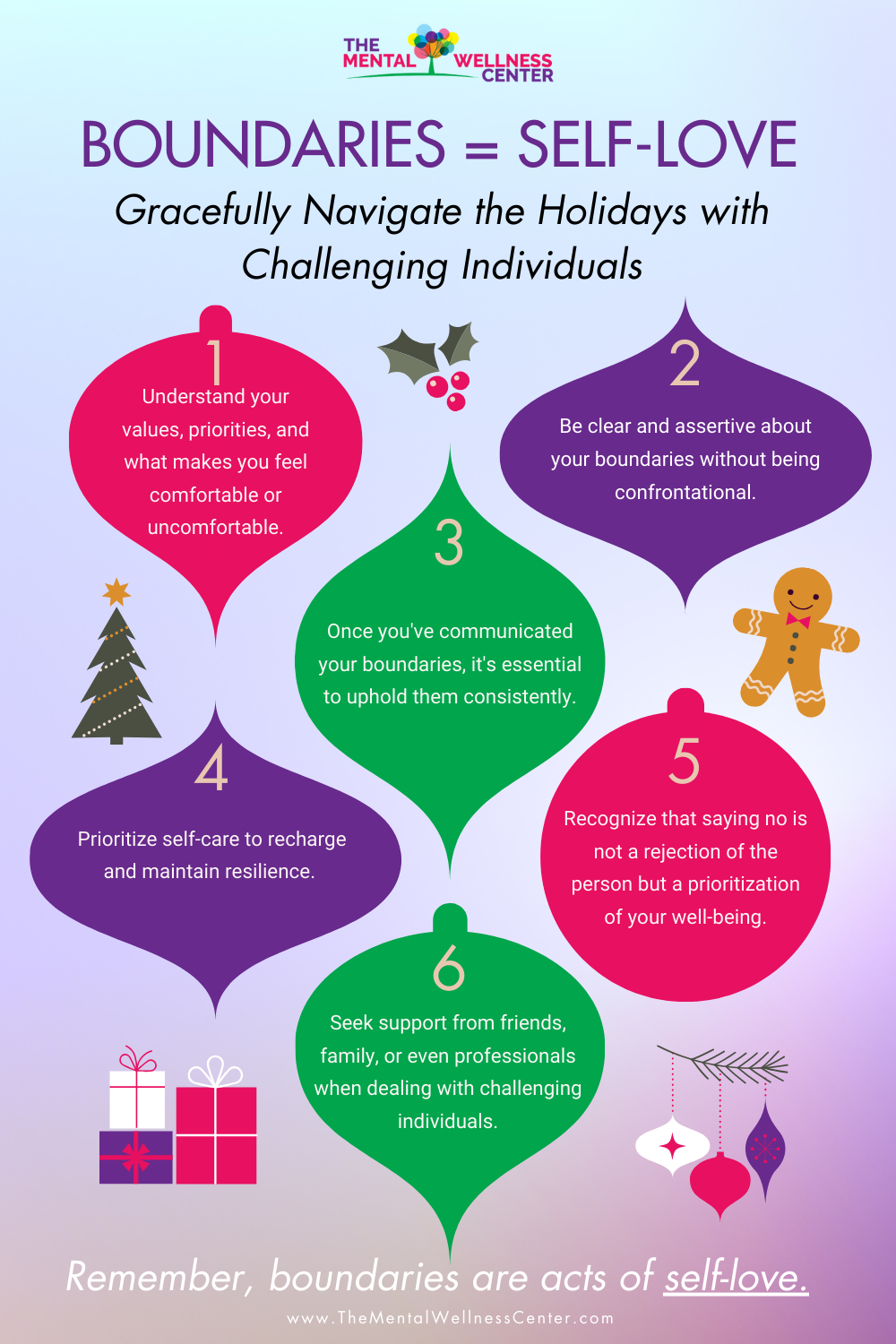
Saying no is a skill that can be challenging but is essential for maintaining healthy boundaries. Recognize that saying no is not a rejection of the person but a prioritization of your well-being. Be firm yet compassionate in your response, and avoid over-explaining or justifying your decision. I really recommend practicing saying no to people who are safe and emotionally supportive and practice over and over again.
Seeking Support: Building a Network of Healthy Connections
It's okay to seek support from friends, family, or even professionals when dealing with challenging individuals. It’s so crucial for you to understand that you are not the problem. Seek out healthy people who will tell you when you have played a part, as well as if you have no part in the challenging relationship. Discussing your experiences and feelings with others can provide valuable insights, validation, and coping strategies. Surround yourself with a support system that understands the importance of healthy boundaries.
Conclusion: Boundaries as Acts of Self-Love
Developing healthy boundaries with challenging individuals is a journey that requires self-awareness, effective communication, and consistency. By prioritizing your well-being, practicing self-care, and learning to say no, you can foster positive connections and create a more harmonious and fulfilling life. Remember, setting boundaries is an act of self-love and an investment in the quality of your relationships.
If you need some help establishing and implementing boundaries please consider setting up an appointment with a therapist. To become a client at The Mental Wellness Center, Inc please click this button. We’d love to help!